
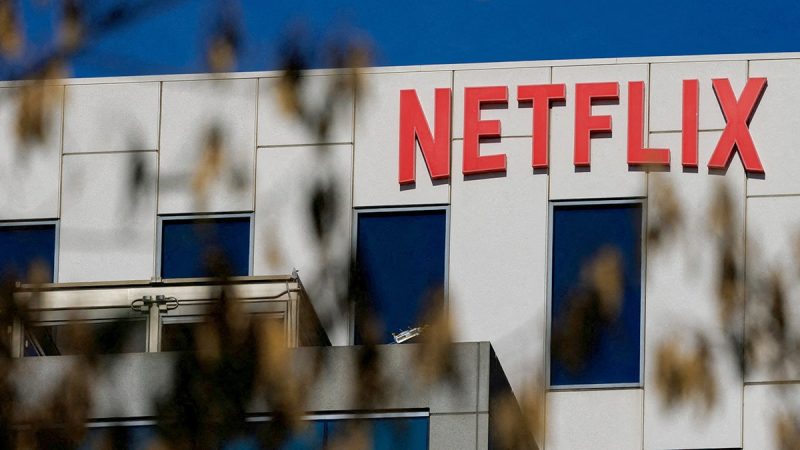
On Tuesday in Washington, Congress is holding a high-stakes hearing that goes well beyond Hollywood — it’s about American jobs, who controls our media and U.S. national security. If Ronald Reagan were alive today, he would urge every American to watch this hearing closely. Reagan understood that culture, storytelling and media are powerful weapons in the battle of ideas — and that foreign adversaries use them to weaken free societies from within.
Lawmakers are weighing whether U.S. companies like Netflix and Warner Bros. Discovery will be allowed to compete and grow — or whether government action will weaken them at a moment when foreign powers are aggressively using media and culture to influence the world.
This matters to everyday Americans because media is no longer just entertainment. It shapes public opinion, exports American values and serves as a counterweight to authoritarian propaganda. When U.S. companies are weakened, foreign governments — especially China — fill the void.
Decisions made Tuesday on Capitol Hill will help determine whether American storytelling remains independent and secure, or whether foreign influence gains even more ground inside one of America’s most powerful strategic assets.
At the center of this debate is the proposed merger between Netflix and Warner Bros. Discovery. This should not be treated as just another corporate deal. It directly affects American jobs, American moviemaking and America’s ability to compete in a global information war.
For more than a century, American films and television have carried our values around the world — freedom, creativity and open expression. That cultural influence has been one of America’s greatest strategic advantages. Today, it is under real threat.
The entertainment industry supports hundreds of thousands of good-paying American jobs — writers, actors, camera crews, editors, visual-effects artists, set builders, marketers and engineers. These are middle-class jobs spread across states like California, Georgia, New Mexico, Texas and New Jersey.
And this is not theoretical.
Netflix recently committed $1 billion to build a new production studio at the former Fort Monmouth Army base in New Jersey, a project expected to create more than 5,000 high-paying American jobs. That investment transforms a former military base into an engine of American production, innovation and employment — and it only happens when companies have the scale and stability to invest for the long term.
Streaming, however, is capital-intensive. When companies are weakened or fragmented, productions slow, opportunities shrink and layoffs follow. Scale brings stability. Stability protects — and creates — jobs.
A combined Netflix–Warner Bros. Discovery would create a stronger, more resilient American company able to invest consistently in U.S. production. That means more projects made here at home and more investments like Fort Monmouth, not fewer.
Hollywood, however, is more than an industry. It is a strategic national asset.
American movies and television reach more people globally than any government program or diplomatic initiative. They shape how the world views the United States and serve as a powerful counterweight to authoritarian propaganda.
China understands this — which is why it tightly controls media at home and heavily invests in state-backed platforms abroad.
And we have already seen how that censorship works.
Consider ‘Top Gun: Maverick.’ The film was a massive global success. Yet China refused to allow it to be shown in its theaters.
Why?
Because of a small patch on Tom Cruise’s leather flight jacket depicting the flag of Taiwan.
Not violence. Not offensive content. A jacket patch.
That single symbol was enough for Beijing to block the film entirely. The message was unmistakable: access to China’s market requires political compliance and self-censorship.
Ronald Reagan understood this fight long before streaming existed. He knew movies, television and storytelling were powerful tools in the battle of ideas — and that foreign or communist influence over American media posed a real threat. As Reagan warned, ‘Freedom is never more than one generation away from extinction.’ Protecting American cultural leadership became a cornerstone of his presidency.
That lesson matters now more than ever.
There are also serious concerns about foreign money entering the American media ecosystem — and the national-security risks that come with it.
Some competing proposals involving legacy studios would shrink the field from five major studios to four, concentrating more power in fewer hands and driving up costs for families who just want to watch a movie at home. That kind of consolidation reduces competition, limits choice and historically leads to layoffs — not innovation.
Even more troubling, some proposed takeovers are reportedly backed by $24 billion from foreign governments, including Saudi Arabia, Abu Dhabi and Qatar.
I am hardly a fan of excessive regulation. But we have laws on the books for a reason — to protect the American marketplace and the American people from foreign manipulation.
Let’s be clear: $24 billion from the Middle East is not philanthropy.
In today’s world, influence is power. When American content is weakened, something else fills the void—and increasingly, that content is shaped or approved by authoritarian governments.
Foreign governments do not invest billions in American media for fun. They do it to gain leverage, influence narratives, and shape what people see and hear. That is a direct national security concern.
In today’s world, influence is power. When American content is weakened, something else fills the void — and increasingly, that content is shaped or approved by authoritarian governments.
That is not just an economic issue. It is a national security issue.
To be clear, I have been openly critical of Netflix in the past, particularly when it comes to some of its woke and radical programming decisions. I have not hesitated to call those out publicly, and I won’t stop doing so.
I also do not own stock in Netflix, Warner Bros. Discovery, or any of the companies discussed here.
My position is not about defending a corporation — it is about defending American workers, American creativity and America’s strategic interests at a moment when cultural influence and national security are inseparable.
The Netflix–Warner Bros. Discovery merger does not eliminate competition. The streaming market remains crowded and fiercely competitive. This deal simply allows an American company to compete at scale against Big Tech and state-backed foreign players.
Ronald Reagan knew cultural influence was national power. That truth hasn’t changed.
In a global competition where China and other foreign powers are using culture as leverage, America cannot afford to weaken one of its most powerful tools.
This merger strengthens it.